The EU is Japan's fastest-growing big food market. The rules follow the importer, the label and the product.
Last updated 19 November 2026 · Sources linked in the text

Japan's agri-food exports to the EU reached ¥57.3bn in the first half of 2026, up 26.4%, more than twice the growth of Japan's exports overall (+10.9%). The EU is now 6.8% of the total.
| Item, all destinations, Jan–Jun 2026 | Exports | Change |
|---|---|---|
| To the EU, all agri-food | ¥57.3bn | +26.4% |
| of which agricultural products | ¥48.6bn | |
| of which fishery products | ¥7.5bn | |
| Green tea | ¥48.3bn | +83.5% |
| Sauces and mixed seasonings | ¥39.1bn | +14.9% |
| Beef | ¥36.9bn | +13.4% |
| Whisky | ¥28.8bn | −0.3% |
| Sake | ¥23.8bn | +4.2% |
| Confectionery (excluding rice crackers) | ¥18.5bn | +13.0% |
| Soy sauce | ¥7.0bn | +7.4% |
| Miso | ¥4.1bn | +15.1% |
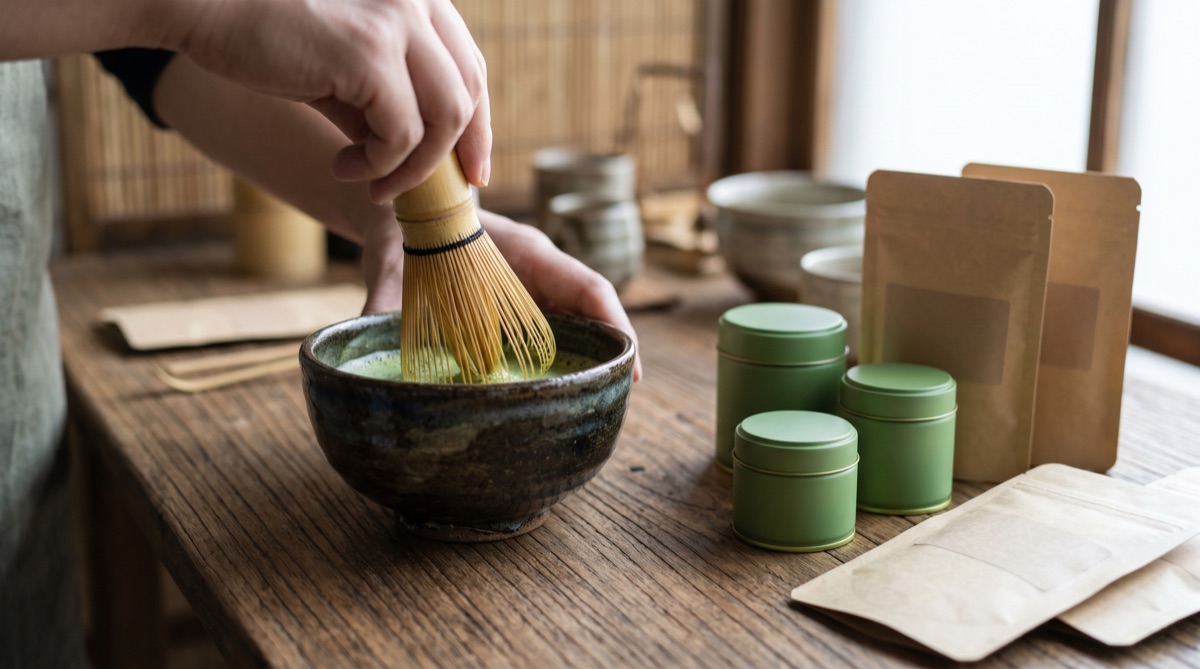
Japan's agriculture ministry puts the green tea jump down to powdered tea, including matcha, bought in Europe, the US and ASEAN as an ingredient for lattes and sweets. Sources (3)MAFFMAFF: agri-food exports January to June 2026 (4 August 2026)MAFFMAFF: January to June 2026 exports by item and destination, from Ministry of Finance trade statisticsJETROJETRO: first-half agri-food exports at a record ¥897.7bn (August 2026)
The EU importer is a food business operator under the General Food Law: it is responsible for the food it places on the market, must be able to trace it one step back and one step forward, and registers with the authority in its country. A Japanese brand selling through a distributor relies on that distributor; one selling direct needs an importer of record in the EU. EUR-Lex
| Rule | What it means for a Japanese product | Law |
|---|---|---|
| Label in the local language | Name, ingredients, the 14 allergens highlighted, net quantity, date, storage, the EU operator's name and address, nutrition table | Regulation 1169/2011 |
| Additives | Only additives on the EU list, at the EU limits; some colours and preservatives allowed in Japan are not | Regulation 1333/2008 |
| Pesticide residues | EU maximum levels per crop; 0.01 mg/kg where the EU has set none | Regulation 396/2005 |
| Products of animal origin | Beef, fish, dairy and many composite products enter only through a border control post, from approved establishments | Regulation 2017/625 |
| Radioactivity checks after Fukushima | Lifted: no special conditions since 3 August 2023 | Implementing Regulation 2023/1453 |
| Tariffs | Zero or reduced under the EU-Japan EPA, with a statement on origin on the invoice | EU-Japan EPA |
Sources (6)EUR-LexRegulation (EU) No 1169/2011 on food information to consumers
EUR-LexRegulation (EC) No 1333/2008 on food additives
EUR-LexRegulation (EC) No 396/2005 on maximum residue levels of pesticides
EUR-LexRegulation (EU) 2017/625 on official controls
EUR-LexCommission Implementing Regulation (EU) 2023/1453 lifting the special import conditions on food from Japan
European CommissionEuropean Commission, Access2Markets: EU-Japan Economic Partnership Agreement
| Japanese label item | EU label |
|---|---|
| 原材料名 (ingredients) | Ingredient list in the local language, allergens in bold or another clear emphasis |
| アレルギー表示 (Japan's 8 mandatory allergens) | The EU's 14 allergens, including celery, mustard, sesame, lupin, sulphites and molluscs |
| 賞味期限 / 消費期限 | Best before / use by, in the EU format |
| 栄養成分表示 | EU nutrition table per 100 g or 100 ml: energy, fat, saturates, carbohydrate, sugars, protein, salt |
| 製造者 (Japanese maker) | Name and address of the EU importer or food business operator |
Related: Matcha and green tea in the EU
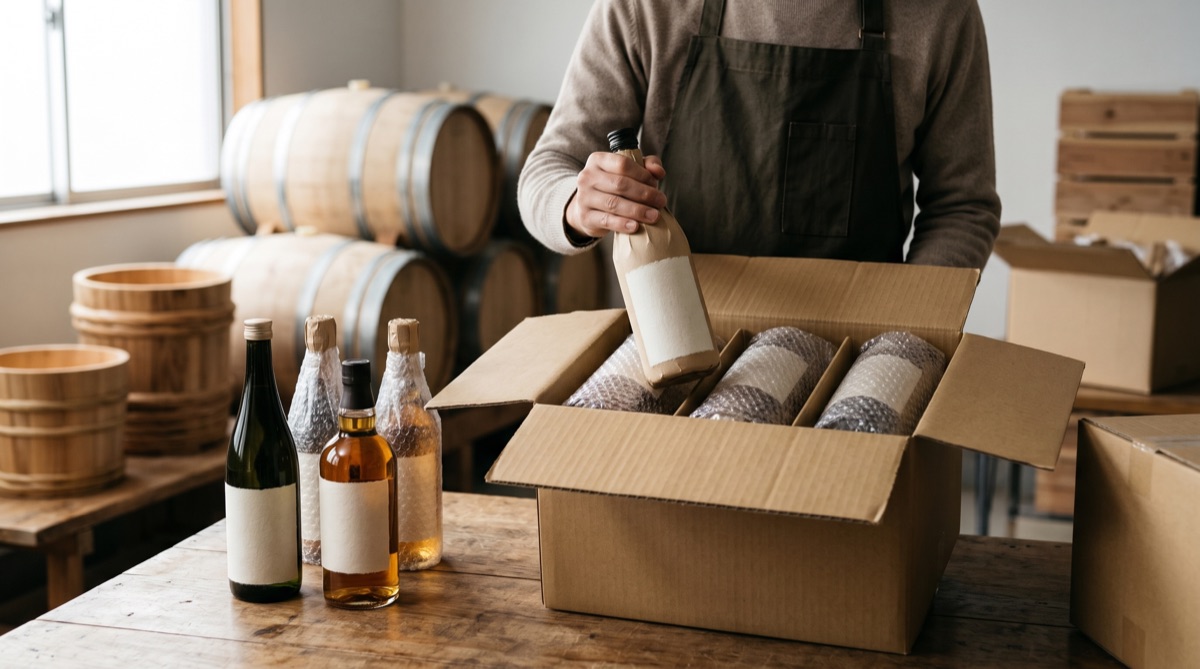
Sake, whisky and shochu also carry excise duty in each EU country, and they can't go through the IOSS parcel scheme. Sake and Japanese whisky in the EU covers excise and distance selling.
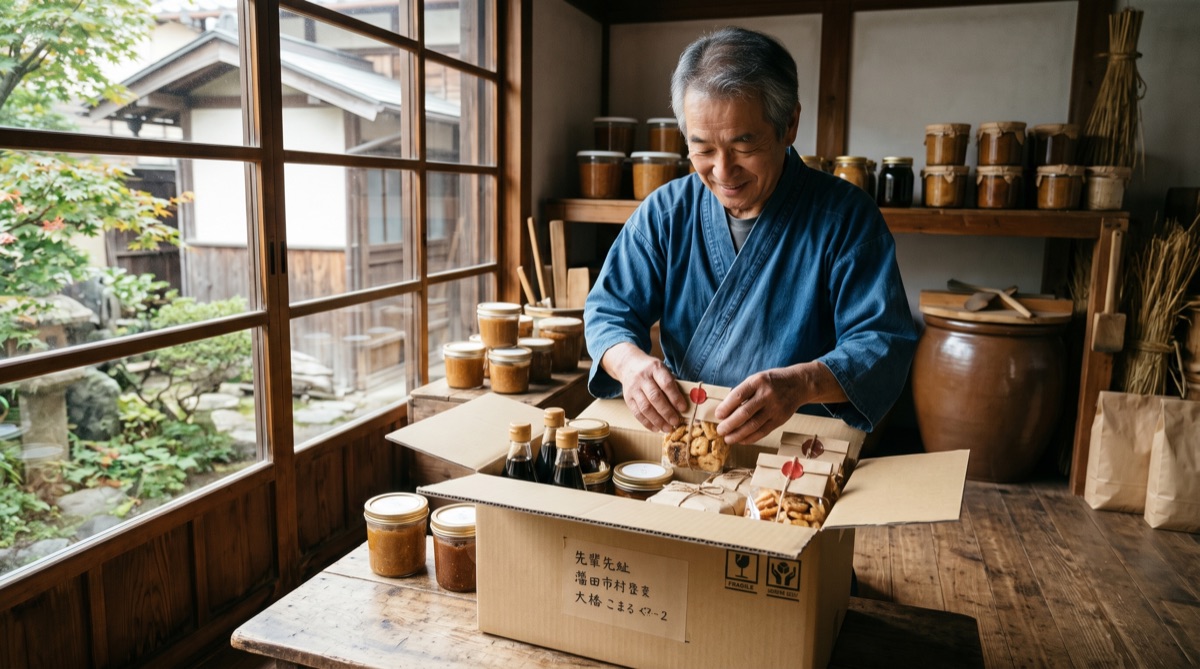
Jars, bottles, pouches, cartons and the shipping box are packaging, and each EU country you sell to has its own registration. Glass is heavy, so jars and bottles weigh most in the declaration. Germany, France and Spain need a representative for a seller established elsewhere; we are that representative in all three. EUR-Lex
Related: Packaging EPR for small parcel sellers
| Sencha or matcha | Milk tea powder with dairy | Sake | |
|---|---|---|---|
| Type | Food of plant origin | Composite product with dairy | Alcohol |
| First check | Customs and food authority at import | Border control post, with official certificate | Customs, with excise |
| Importer's task | Food business registration, label, residue compliance | Check that Japan and the plant are listed for the dairy ingredient, then the certificate | Excise status, label, excise registration for sales to other countries |
| When it escalates | A residue above the limit: border rejection and an EU alert | Not listed: the product can't enter | Distance sales to consumers in other EU countries |
| Guide | Matcha | Ask the importer's veterinary service before ordering | Sake and whisky |
Sources (4)EUR-LexRegulation (EU) 2017/625 on official controls
EUR-LexRegulation (EC) No 396/2005 on maximum residue levels of pesticides
EUR-LexRegulation (EC) No 178/2002, General Food Law
EUR-LexCouncil Directive (EU) 2020/262 on excise duty, Article 44 (distance selling)

Razvan Toma is the founder of EPR EU Rep, the group behind EPR France Rep, EPR Germany Rep and EPR Spain Rep, authorised representatives for producers with no establishment in those countries. He has worked in waste management and recycling since 2009, running circular economy programmes inside large B2B organisations in France for clients including Chanel, Microsoft, Decathlon, Pirelli, IKEA, Vinci, Capgemini and E.Leclerc.

Connect on LinkedIn →
From JapanSelling in the EU from JapanJapanese sellers entering the EU: the EU-Japan Economic Partnership Agreement, VAT on parcels, cosmetics rules, and packaging EPR in France, Germany and Spain.Read →
From JapanSelling Japanese cosmetics in the EU: the compliance checklistJapanese skincare and make-up in the EU: the Responsible Person, the safety assessment, the product file, the CPNP notification, EU labels, packaging EPR and the EU-Japan EPA.Read →
From JapanMatcha and green tea in the EU: residues, organic, labels and dutyGreen tea exports up 83.5% in H1 2026. EU pesticide residue limits, the organic JAS equivalence and its end date, labels, zero duty under the EPA and packaging EPR for a tin.Read →
From JapanSake and Japanese whisky in the EU: excise, distance selling and labelsExcise duty in each EU country, the distance-selling rule (register before dispatch), why IOSS doesn't cover alcohol, labels for sake and whisky, and zero duty under the EPA.Read →
From JapanJapanese knives and tableware in the EU: food contact rulesFood contact rules for kitchen knives, ceramics, plastics and lacquerware, the tighter Dutch and Luxembourg ceramics limits from May 2026, GPSR and packaging EPR.Read →
From JapanAnime figures and toys in the EU: toy or collectible?When a figure is a toy (under 14) and when it is an adult collectible, what a toy needs (tests, CE marking, warnings), the new Toy Safety Regulation from 2030, licences at customs and France's toy EPR stream.Read →We act as your representative in France, Germany and Spain: registration, numbers and yearly declarations.